

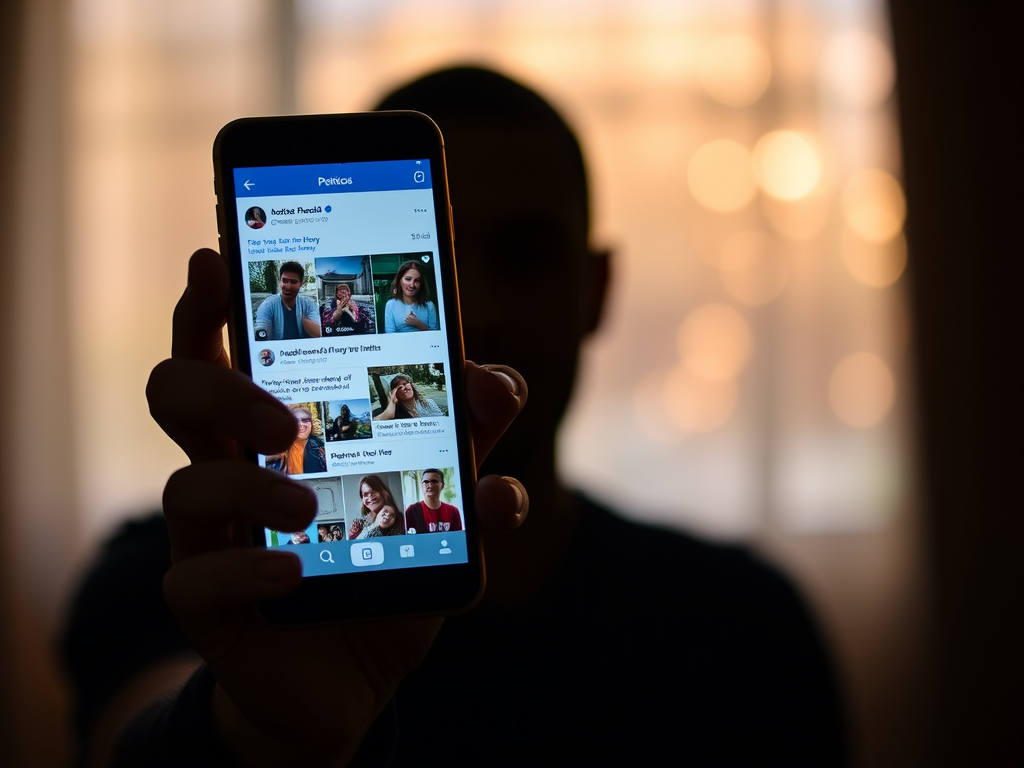
How you have opted out of your privacy as soon as you click “post”
Let’s have a little sit-down and talk about online safety, shall we?
I know, I know, you’re living your best life. You just made the perfect avocado toast. You’re in love. You’re in heartbreak. Your pet is doing something cute. Your coworker said something absurd. Your ex texted you “hey,” again. You are a Capricorn and the best leader ever…EVERYONE MUST KNOW (no offense to Capricorns). Your partner just cheated on you and now everyone you know should be involved.
And you, besties, feel the urge to post. But here’s the thing:
Every single time you post,
you hand over a piece of yourself to the internet.
And the internet never forgets.
Not anymore.
I understand why you do it.
In my early twenties and even in my teens, I was also chronically online (heck, I still am. I am a multi-genre writer. I am always curating whatever content I make based on trends, my insights, whatever I feel like writing, and demand).
However, as I have briefly covered in my last post: Hi, Humanity. Not Everything You Read Online Is Factual (read it from here), the internet from a decade ago is no longer the same.
As a Millenial, I remember when the internet is still the Wild West. No such things as SEO, no aggressive algorithm that had a vice grip on your attention, and the most fun thing that a lot of people partook in was customizing their MySpace accounts (it was just simple HTML and CSS…and really cringey poetry to make us look deep ahaha).
But the internet is no longer like that, and creators, like me, who understand the value of YOUR attention, customize our designs and story-telling based on the data that YOU willingly give us (and yes, I too, gave up my true privacy. I am just like YOU).
Here is the caveat too. Not everyone online means well like me (yes, of course I am biased). Not everyone online is using your data just for content creation or advertising. There are many bad actors online, and contrary to belief, they don’t have to be in the dark web.
You see, the moment you hit ‘post,’ you’ve not only shared a moment, you’ve also shared a data point.
That data point can be scraped, sold, analyzed, weaponized, or stored indefinitely. Not necessarily by governments or corporations, but sometimes by individuals.
Curious ones.
Predatory ones.
Or just bored ones with too much time and not enough ethics.
Here’s what you’re really doing when you post online:
- Sharing your location (yes, even if it’s “just” a café name or a geotag).
- Giving away your routine (you’re always at the gym at 6 PM? Noted).
- Publicizing your emotions (an algorithm’s dream—now it knows when you’re vulnerable).
- Revealing your relationships (not just who you’re dating, but who you’re NOT posting anymore ).
- Broadcasting your thought patterns (even when you’re trying to be cryptic…you’re not that cryptic).
And even if you delete it later? Sorry babe, unlike the internet a decade or so ago, screenshots now exist, data scrapers exist, archived pages exist, and yes, some apps auto-back up your content to “improve their service.”
Oh! Now, that I got you a bit paranoid, do you remember answering those questions on your social media:
Let’s get to know each other more!
➡️ What is your favourite colour?
➡️ What country did you live in?
➡️ Favourite band?
➡️ Favourite food?
➡️ What year were you born?
➡️ Zodiac?
➡️ Selfie with it! 💋
Yes, besties, those got indexed somewhere in the internet and you don’t know where. Also, guess what?! Most of the websites still use security questions as a form of authorization.
Of course, I fell for that too.
As I have said before, NO ONE IS IMMUNE TO PSYCHOLOGICAL MANIPULATION, and the internet is rich of that!
But wait! Don’t I have privacy settings?
You do! And they’re…cute.
Privacy settings are not absolute protection. They only limit who can see your content directly on the platform and not what the platform does with it, and certainly not what other users do.
Let me be blunt: you don’t need a hacker to lose your privacy.
You voluntarily gave it away the moment you typed “just landed in Cancun!!!” or posted that cute pic in front of your apartment building with the street name visible, license plate(s) on your vehicle(s), and your neighbour’s front door which has that big glowing street number.
Let me give you a quick crash course on contract terminology, okay?
When a company says something like:
“XYZ Company may use data as XYZ Company deems necessary,”
it doesn’t mean YOUR definition of “necessary.”
It means THEIRS.
In legal language, especially corporate contracts, vague terms like “necessary,” “relevant,” or “appropriate” give wide discretionary power to the company.
NOT THE USER.
So, if you’re ever reading a privacy policy or terms of service and think, “Well that sounds reasonable…”—pause. Reasonable to whom?
But hey, what do I know other than I had legal training? (Not a legal advise, obviously)
Why oversharing became normal
Blame dopamine.
Blame validation culture.
Blame the rise of “relatability influencers.”
Blame marketing tactics that reward visibility.
But don’t forget to also blame…ourselves. We got addicted to expressing ourselves online, and in the process, we trained our brains to equate likes with love, views with value, and followers with friends.
And now? We’re bleeding our personal data in exchange for a temporary high and a few heart reacts.
Let’s get a little scientific then while I still have your attention (or so I hope).
There’s a reason why we are wired like this and I have briefly covered this in my last post.
You see, everything online is psychologically curated ― down to colour theory, font size, choice of font, white spaces on the web pages (yes, you probably noticed how I intentionally space out my paragraphs here), images, emotions, storytelling and repetition, cadence and tonality (yes, dears, I use this quite professionally as a writer), and hooks.
For example, years ago, I have written Guidelines to Writing Online (see my old post here) on Medium. Although there has been many changes since two years ago in how SEO operates, the concept remains the same: the internet is curated.
It’s not accidental.
It is engineered.
Designers, marketers, and content strategists (like me!) study and deploy these elements: images, emotion, story structure, cadence, and tonality to hook your attention and guide your reactions.
And it works.
Every time.
I hope that if you ever get into the rabbit hole of reading everything I have ever written (including the fictional ones), you get to understand how much I use psychology in my styles.
Most writers do this without knowing, and you probably do too to a certain extent.
As a gift, here are some academic papers I found for you.
Read them and analyze them. Don’t use AI to summarize them. Understand them well and arm yourself with awareness. Awareness and knowledge are the greatest power you can ever possess.
- Oversharing on Social Media: Anxiety, Attention‑Seeking, and Social Media Addiction Predict the Breadth and Depth of Sharing (Shabahang et al., 2024) — This study found that anxiety, attention‑seeking, and social media addiction are significantly associated with higher levels of online oversharing. PubMed
- Nudge for Deliberativeness: How Interface Features Influence Online Discourse (Menon, Zhang & Perrault, 2020) — Examines how interface design features (like word‑count anchors, partitioned text fields) affect how deliberative or mindless we are online. Great for your interface/design psychology point. arXiv
- How the Design of YouTube Influences User Sense of Agency (Lukoff et al., 2021) — Focuses on how autoplay and curated feeds reduce users’ sense of agency—relevant to how attention gets hijacked. arXiv
- Quantifying the Impact of Making and Breaking Interface Habits (Garaialde et al., 2020) — Discusses how interface habits form via repeated exposure and how changes disrupt performance—useful for your attention span point. arXiv
- Emotion and Interface Design (Lockner & Bonnardel, 2014) — Investigates how design strategies can evoke emotional responses tied to interface interactions; supports your claims about visuals, cadence, spacing influencing behavior. ResearchGate
May this be the first steps for you to find other resources regarding this matter.
So what should you post?
I’m not saying become a digital ghost (unless you’re into that. Probably safer). But maybe pause before you post:
- Does this really need to be public?
- Am I sharing this because I want connection, or because I’m chasing validation?
- Could this post be used against me later?
- Will future-me cringe? (Listen, I make myself cringe all the time, but I’ve learned to laugh at it. You might not feel the same about your own posts.)
- Is this someone else’s story I’m telling without their consent? (P.S. That can veer into legal territory: think libel, defamation, or even doxxing.)
- Am I only doing this because I feel invisible in real life?
- Am I relying on parasocial relationships to fill a void?
And finally,
before you post that photo or video of your child, niece, nephew…ask yourself:
Do I want random strangers to have access to it—
especially when AI can now create eerily realistic deepfakes with just a face?
Sometimes, the best flex is the one you don’t share.
But what do I know?
After all, I am beginning to sound like an old person who yells at the clouds for hailing.
Anyway, here is another gift for you regarding AI safety:
- The Malicious Use of Artificial Intelligence (Brundage et al., 2018) ―A broad survey of how AI can be used maliciously—including automated hacking, disinformation, identity theft, and more. arXiv
- Generative AI Misuse: A Taxonomy of Tactics and Insights from Real‑World Data (Marchal et al., 2024) ― Qualitative analysis of 200+ real misuse incidents of generative AI (text, image, audio, video) by adversaries. arXiv
- Countering Malicious DeepFakes: Survey, Battleground, and Horizon (Juefei‑Xu et al., 2021) ― Technical survey of deepfake generation/detection methods, the “arms race” between creators & defenders. arXiv
- AI‑Powered Spear Phishing Cyber Attacks: Fact or Fiction? (Kemp, Kalutarage & Al‑Kadri, 2025) ― Empirical study showing how deepfake and AI audio/video aided spear‑phishing attacks and how users failed to detect them. arXiv
- Exploration of AI Synthetic Media and Deepfake (Powell, 2025) ― Focused on accessibility of deepfake tools for bad actors and the challenge of existing detection & legislation. IACIS
- National Institute of Standards and Technology (NIST) “Artificial Intelligence Spoofing” brief (2025) ― Government documentation of AI spoofing: deepfakes, voice imitation, identity fraud, data exploitation. nist.gov
TL;DR
You don’t owe the internet a play-by-play of your life.
You can be visible without being vulnerable, online without being exposed, and real without being reckless.
Your privacy matters.
If companies fight over your data, maybe it’s time you start valuing it too.
And to the youth (or anyone still trying to belong):
I see you.
I remember the pressure.
Every adult has faced it—and most still do.
But social media has made that pressure relentless, especially in high school.
You’re growing up in a digital intensity we never had to face.
So please, remember:
Most people you try to impress in high school won’t be around later.
Popularity doesn’t translate to adulthood.
Don’t trade your identity for validation.
If someone truly values you, they won’t pressure you to compromise yourself, and you shouldn’t do that to others either.
And yes, just because you’re chronically online, it doesn’t mean you’re doomed forever. That’s not what I’m saying here.
What I am offering is insight and education.
You’ve probably heard this line before:
“If someone really wants your data, they’ll get it.”
Fair.
But that doesn’t mean you leave the front door wide open, toss out a welcome mat, and hang a neon sign that says “come rob me.”
This post isn’t just about online safety.
It’s also a reminder that everything—from web design to content creation to curated copy—is built to influence you.
Sometimes to inspire,
sometimes to sell,
sometimes to exploit.
And knowing that?
That’s YOUR power.
Read more from me here:
- We Outsourced Our Brains To AI…Now What?
 The article discusses the cognitive costs associated with increased reliance on AI tools and the internet, raising concerns about diminishing memory and critical thinking skills. It highlights the “Google Effect” and cognitive offloading, showing a correlation between AI dependence and decreased analytical abilities, particularly among younger users, while emphasizing the importance of maintaining cognitive engagement.
 - Hi besties! You don’t have to post everything about your life online.
 A raw yet insightful look at online oversharing, digital privacy, and how web design and content creation subtly shape your behavior. Learn why protecting your data and attention matters more than ever in an AI-curated world.
 - Hi, Humanity. Not Everything You Read Online Is Factual.
 Learn how to spot misinformation online by understanding SEO, AI bias, emotional manipulation, and the psychology behind digital content.
 - I Tried to Build an App…Now I’m in a Full Existential Spiral
 Choosing My Old App…and Accidentally Rebuilding a Whole Product So, I graduated in April 2025 with a glowing average of 95.8% (yes, mom, I know, why not A++? Just kidding) from UofT Continuing Studies – Software Development BootCamp, and instead of coding immediately like I probably should have, I sat there like: Hmm… what is… Read more: I Tried to Build an App…Now I’m in a Full Existential Spiral
 - Implementing Dark Mode in React
 We have previously talked about useState before. A great way to create CSS classes on the fly is to use state variable! Here is an example of how to create Dark Mode in React by using string interpolation to construct the individual classes based on the state variable mode. index.html index.jsx App.jsx App.css So, if… Read more: Implementing Dark Mode in React